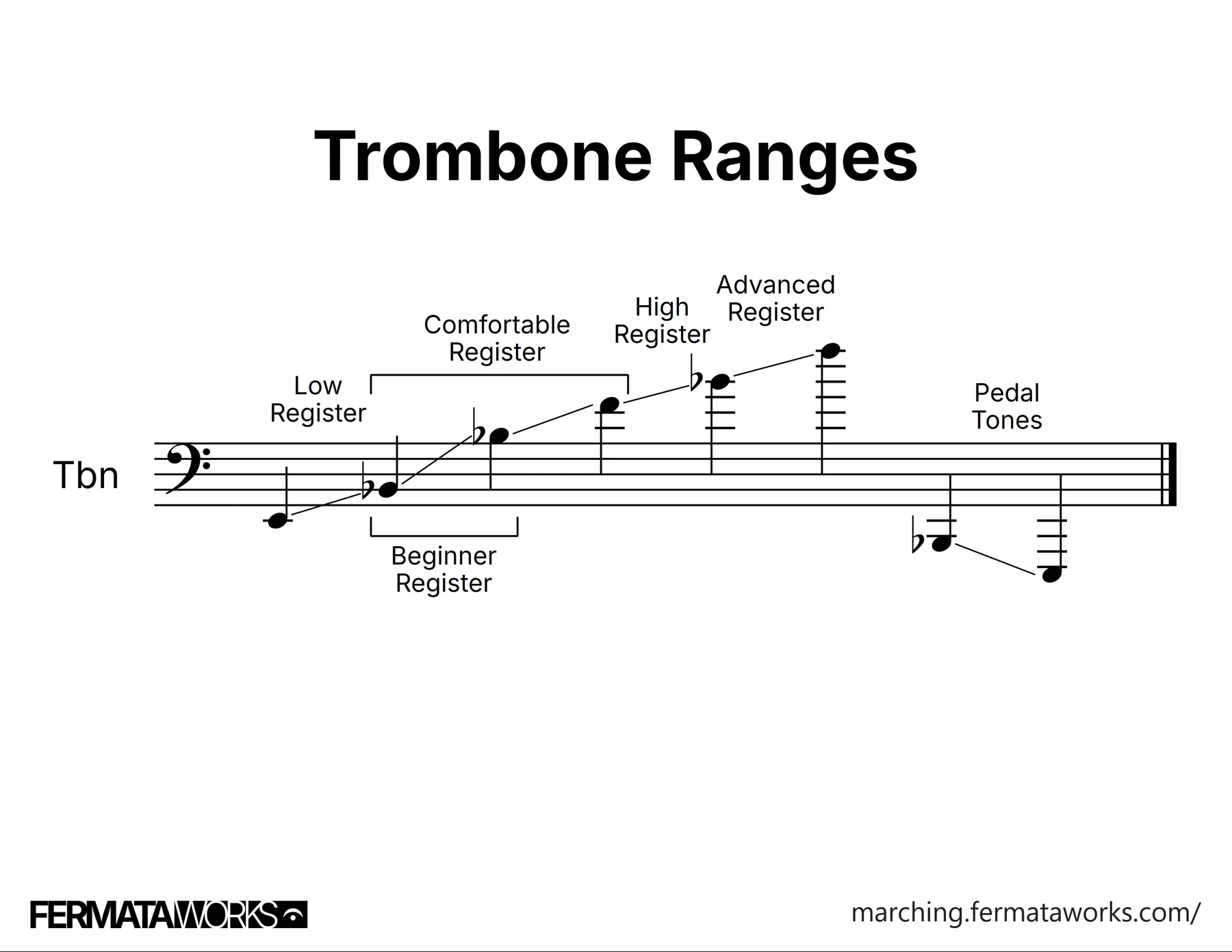
Low Range
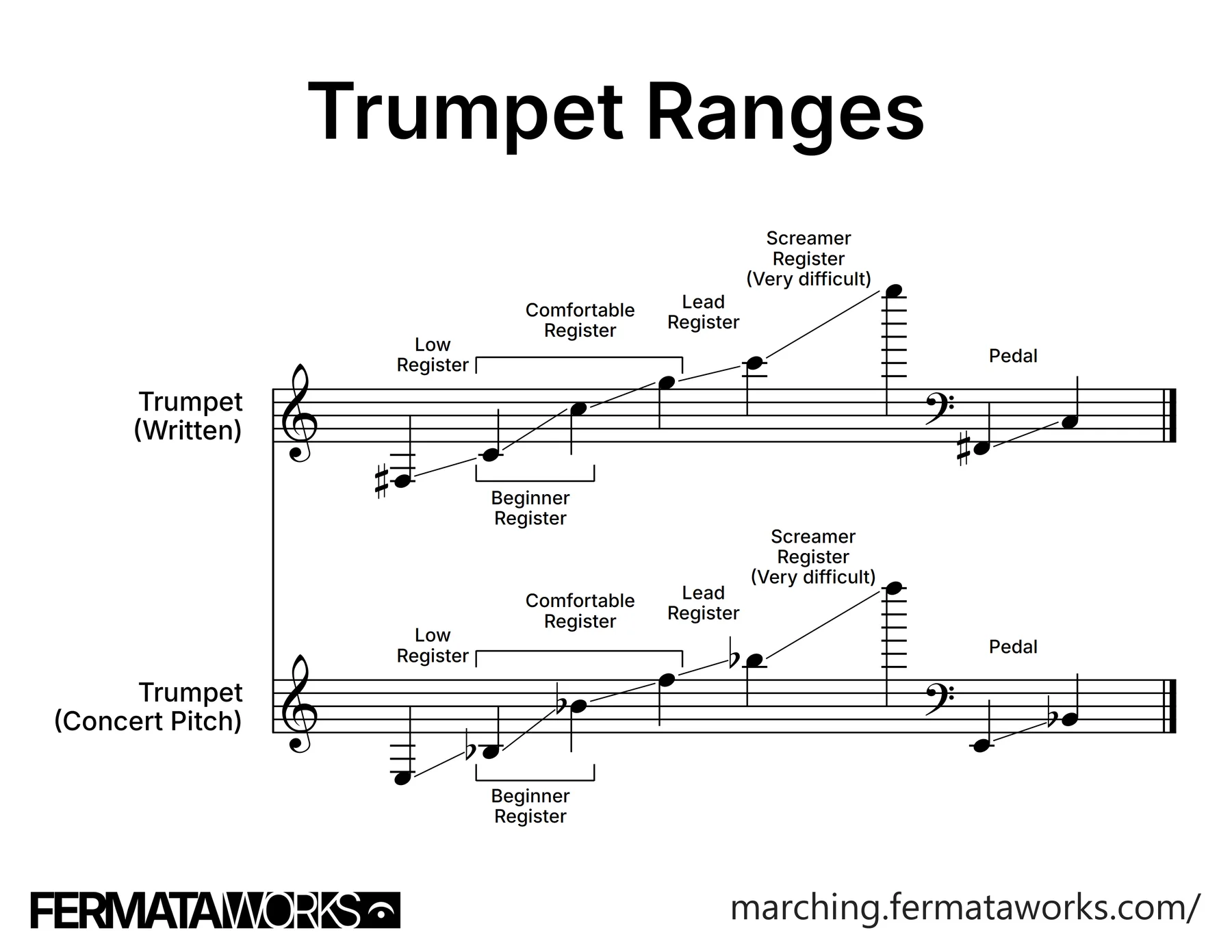
Stylistically, the low range can be one of the most expressive ranges on the trombone. It's able to produce a beautiful dark sonorous euphonium-like sound, and also able to produce a heavy full "bring down the walls" sound. The key to making both those sound good is more air. Without enough air, the darker sound will be too thin and the fuller sound will be closer to a laser tone. Long tones help this range.
Comfortable Register
This is the register trombone players can be in comfortably. It's also where they're most often placed in music. The upper end of this register is where 1st parts normally play. Not every trombone player has the stamina to stay in that register, so make sure you give your students the part based on their endurance. The beginner register can be played in almost indefinitely without becoming chopped.
High Register
The high register is reserved for features or occasional sustains that need more power. With the right player, it can be a gorgeous sonorous range when needed, or a powerful range when the music asks for it. Endurance can be tricky in this register, but can become easier through long tones and lip slurs. Lip slurs between F above staff and high Bb while avoiding the ~Ab partial are a great way to build this range.
Advanced Register
It's very rare to see this register unless you're playing virtuosic music. The advanced register is often used in features for very strong players. It's difficult to maintain a good sound this high. It takes lots of air, good control and strong lips. As a trombone player myself, I love playing in this range, but I can only do so for a few minutes, then need a break for at least ten minutes until I can get up there again. I find that slowly playing tunes you know in this register can help improve it.
Pedal Tones
Pedal tones are more common on the trombone then any other brass instrument in writing. They're often used for powerful sustains to add to lower instrument's power. They have a strong brassy sound to them. It gets harder to play the further from Bb you go, and are more likely to be out of tune. Most players will mistakenly use less air then needed to get a pedal sound. Using the low register and switching between the two can be a great way to practice pedals. Also starting on pedal Bb then walking down by half steps is another great way to practice pedal tones.