

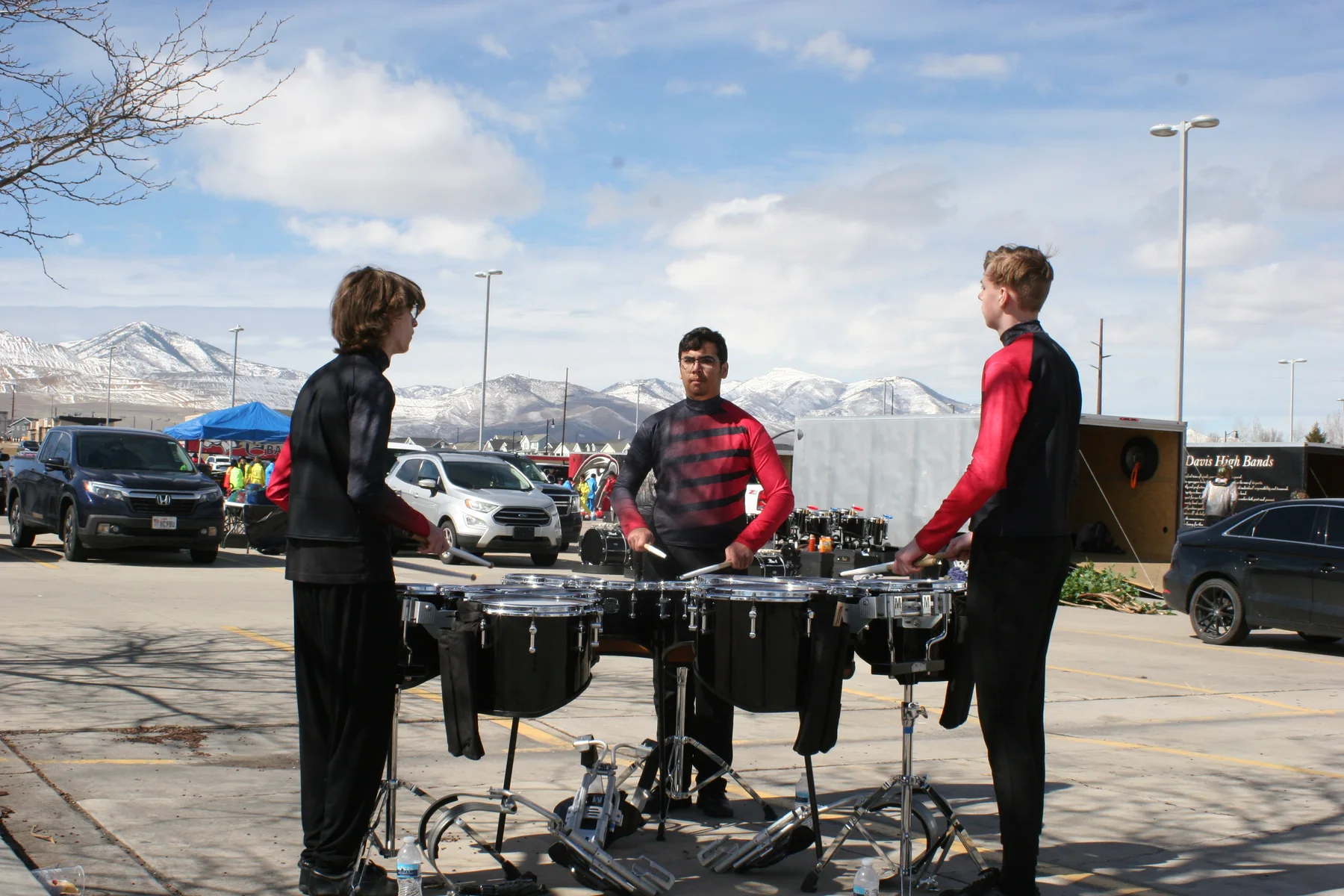
WGI uses a system of classification to make sure groups competing against each other are within similar levels of experience and performance ability. This makes competitions more fair while letting performers still develop their skills.
In this blog we'll explain what scholastic and independent mean, and what A class, open class, and world class all entail.
What is WGI?
Winter Guard International, or officially referred to as WGI Sport of the Arts, is an organization that hosts competition for indoor performing arts ensembles. WGI has 3 primary ensemble types:
Color Guard: Performances combining dance, movement and equipment (Flags, rifles, sabers, and more).
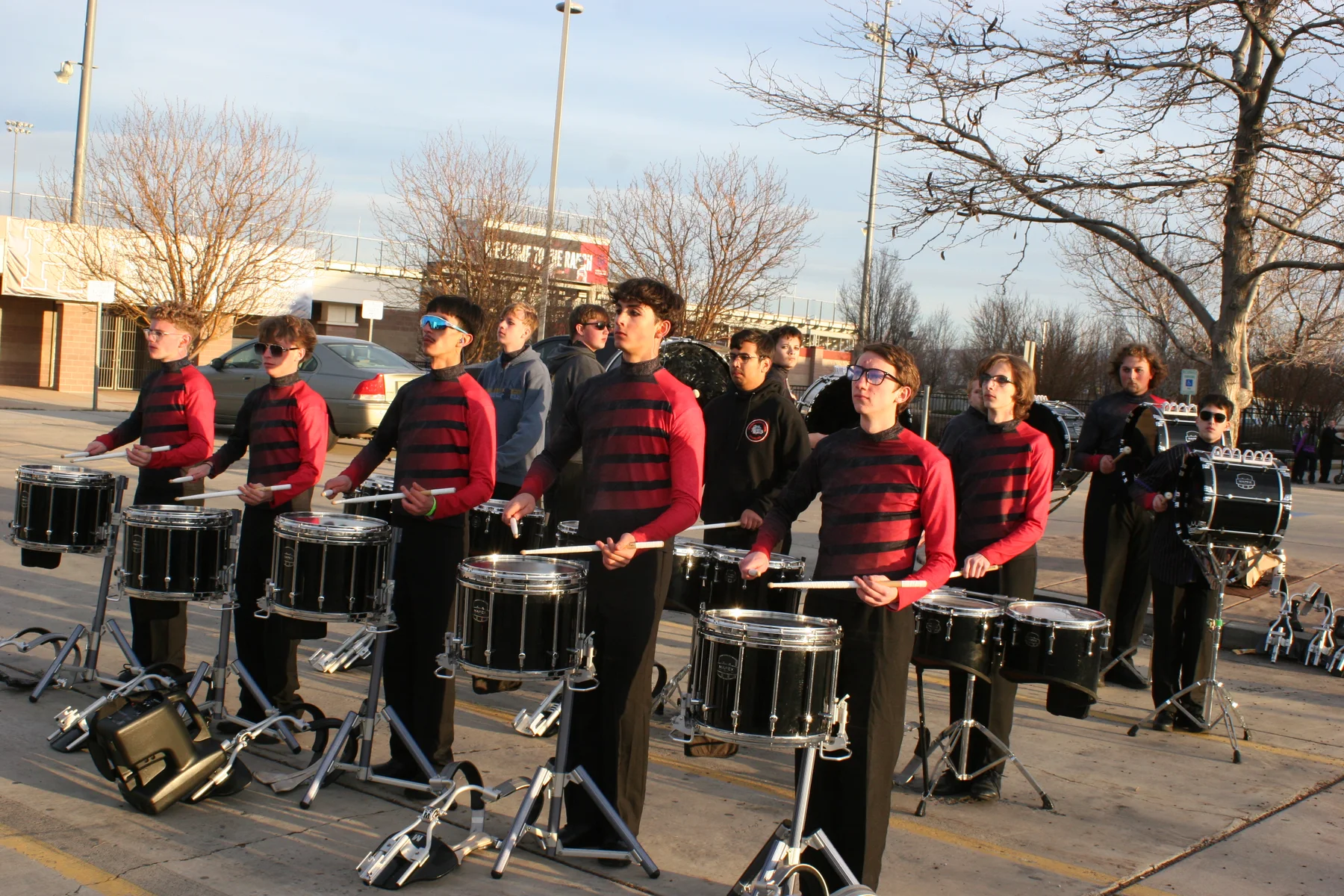
Percussion: Indoor percussion ensembles combining movement and music.
Winds: Indoor wind ensembles combining movement and music.
Each ensemble has their own method of judging, but they share a similar classification structure.
Scholastic Vs. Independent
Before looking at what A, Open and World class means, let's take a look at the difference between scholastic and independent. This shows us how an ensemble is organized and where their performers come from.
Scholastic ensembles are associated with a school and performers from said school. They may also have performers from schools that feed into that ensemble's school. A good example is a high school indoor percussion ensemble, composed of performers from that same school. Scholastic ensembles can compete in A class, open class or world class. WGI also has specific rules for ensembles that are multi-school combined.
Independent ensembles are ones where the performer eligibility is not tied down to a single school. These ensembles may include performers from several high schools, cities, states, and even countries! Some independent ensembles are associated with a school, but allow members from outside said school. Like scholastic, independent ensembles are allowed to compete in A, open and world class. Independent groups also have their own class specific eligibility and age requirements.
To clarify, independent does not mean better than scholastic. A scholastic A ensemble may perform at a higher level than an Independent A ensemble.
What are the Different Classes?
WGI organizes its main competitive levels into A class, open class, and world class.
Regional A: Novice ensemble focusing on introductory skills and development.
A Class: Beginner class focusing on fundamental techniques and consistency.
Open Class: Intermediate ensemble focusing on more advanced skills and creative development.
World Class: Advanced ensemble focusing on high level performance and innovative design.
Regional A is a separate class only available for color guard.
A Class
A class is for building and developing fundamental skills. These ensembles perform shows that focus on achievable musical and visual responsibilities, allowing performers to develop technique and consistency. An A class show can still be engaging and entertaining. The difference is that the show is often more accessible compared to other classes.
An A class ensemble focuses on
- Consistent rhythmic accuracy
- Strong fundamental technique
- Clear musical phrasing
- Achievable movement
- Effective coordination between musical and visual elements
- Clear understanding of equipment techniques
- Clarity in choreographic design
Open Class
Open class is the intermediate level of WGI competition. Ensembles in this class demonstrate stronger technical foundations and are ready to explore more challenging musical and visual responsibilities. Compared to A class, open class features more demanding musical passages, more complex movement, and more coordination between different performance elements. For example, an open class guard show may include tosses that involve more complex coordination and planning from several members in order for a catch to be done without injury.
An open class ensemble focuses on
- Multi element coordination
- Higher level rudiments (Mills, Cheeses, Grandmas etc)
- Larger step sizes
- Quicker tempos (Or even slower)
- Higher artistic demand
- Complex choreography
World Class
World class represents the highest competitive level in WGI. These ensembles often have exceptional technical ability, sophisticated artistic design and a high level of musical and visual achievement. They often push the boundaries of what's possible in an indoor performance.
World class productions may include
- Extremely demanding musical and visual responsibilities
- Advanced coordination between many performance elements
- Sophisticated staging and choreography
- Complex artistic ideas and storytelling
- Innovative approaches to equipment, electronics and design
Regional A Class
Regional A is an introductory class for developing essential basic technical skills for color guard programs. It provides an opportunity for novice ensembles to compete against groups of the same skill and experience level. Regional A is also helpful for programs that are introducing curious new students into competitive winter guard. Regional A derives its name from the fact that it's not at WGI world championships, but it's available at most regional events.
Where Does Concert Percussion Fall?
WGI also has scholastic concert percussion classes! Unlike the other ensemble types, concert percussion is done without marching and movement, letting them demonstrate their pure musical abilities. They feature the same classes as other ensemble types, A, Open and World class.
How Does WGI Choose an Ensemble's Class?
WGI class assignment is based on the developmental level and demonstrated abilities of the ensemble. Many factors influence the classification including technical achievement, performer training, and show demands. Ensembles may register for whatever class they choose, but WGI will review the self classification and can reclassify an ensemble. Judges and classification officials can also determine that a group would be better placed in a different class. They do this in order to keep fair competitions and ensure that all ensembles are evaluated against other ensembles of the same caliber.
Can an Ensemble Change Classes?
Yes! Ensembles will change classes as their program develops. A scholastic A class ensemble can move up once they determine that their ensemble has fundamental techniques down. While ensembles may advance as their programs develop, it's uncommon for a group to move up a class every single year. Many ensembles remain in the same class for several seasons while developing their performers' skills. Just as ensembles are able to move up, they can also move down if they feel that fundamental skills need to be focused on more.
What is SO, IW, IA, etc?
What is SO, IW, IA, etc?
WGI has a shorthand for ensemble classification. S stands for scholastic and I stands for independent. A is A class, O is open class and W is world class. So SO would be scholastic open.
SA: Scholastic A
SO: Scholastic Open
SW: Scholastic World
IA: Independent A
IO: Independent Open
IW: Independent World
Final Thoughts
WGI's class system is there to encourage growth and maintain a fair competition. It's a simple fact that some ensembles do not have the resources to fairly compete with some other ensembles. This system is designed to encourage and recognize achievement.
If you're looking to have a show designed for your ensemble, we here at Fermata Works understand classification systems inside and out and will create you a show fit for your needs. Contact us for a custom made indoor show!


Comments
No comments yet.
Sign in to join the conversation.
Login to post a comment